Blog
Latest insights, stories, and tutorials about AI Summary.
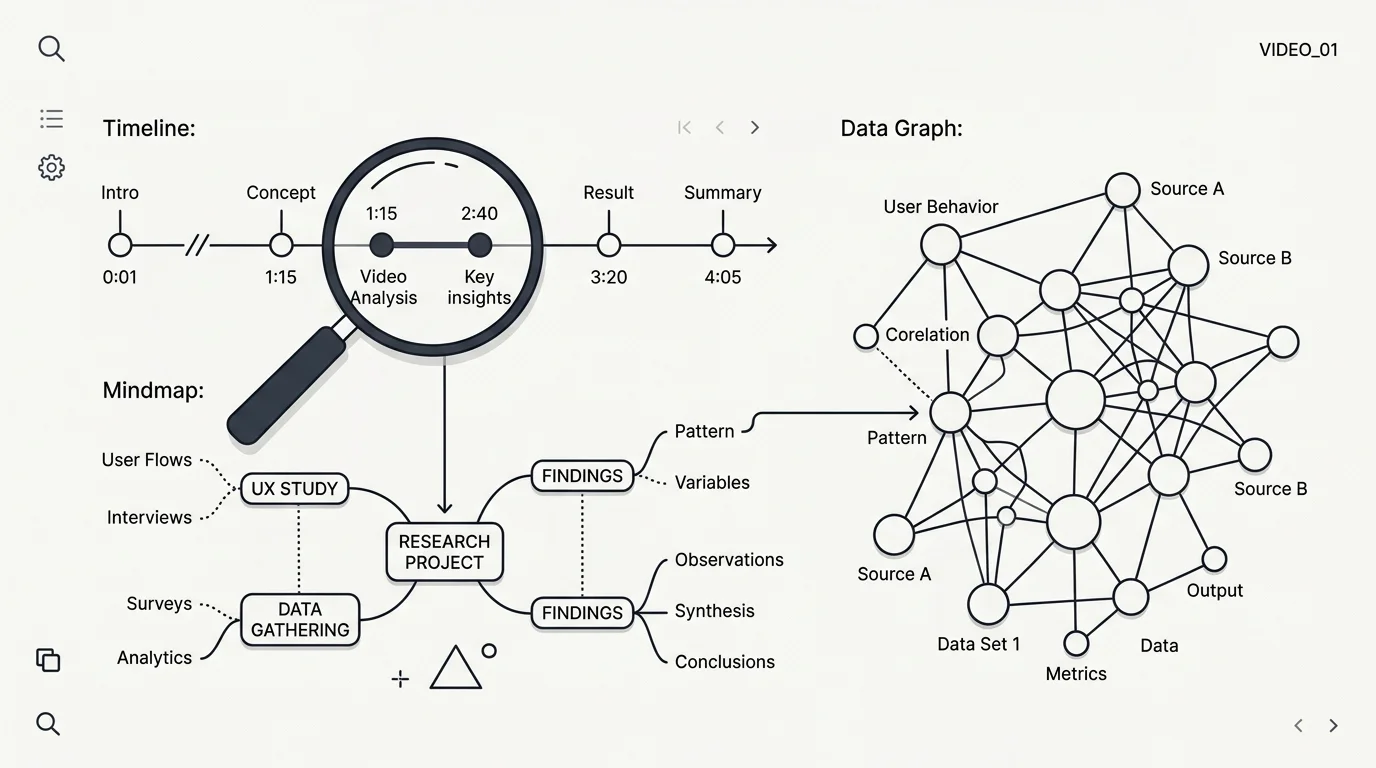
How to Research a Topic Using Only YouTube (AI-Assisted Deep Dive)
YouTube has more expert content than most libraries. Here's how to use AI tools to research any topic efficiently using video — a complete 5-step workflow.
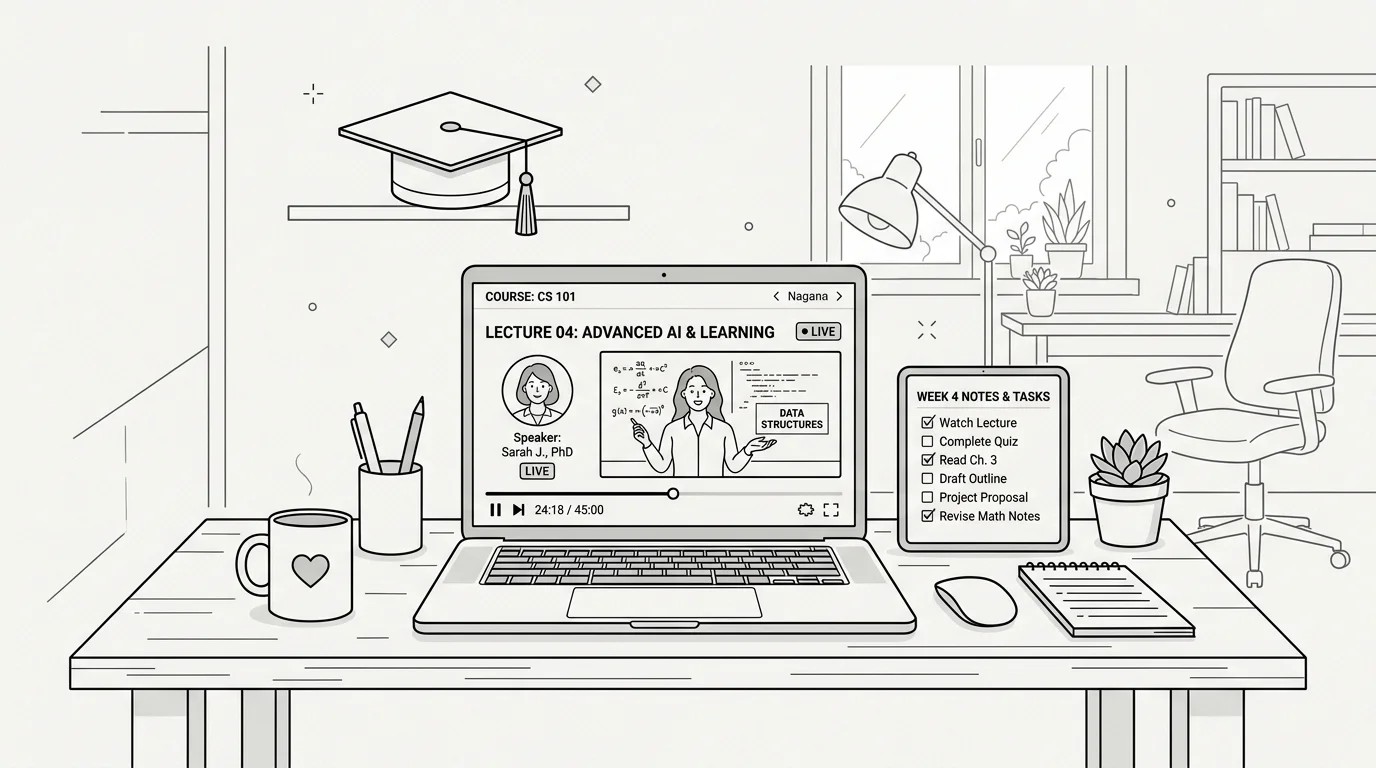
How to Get the Most Out of Free Online Courses on YouTube
YouTube has thousands of free courses. Here's how to study them effectively, take smart notes, retain what you learn, and build real knowledge — not just...
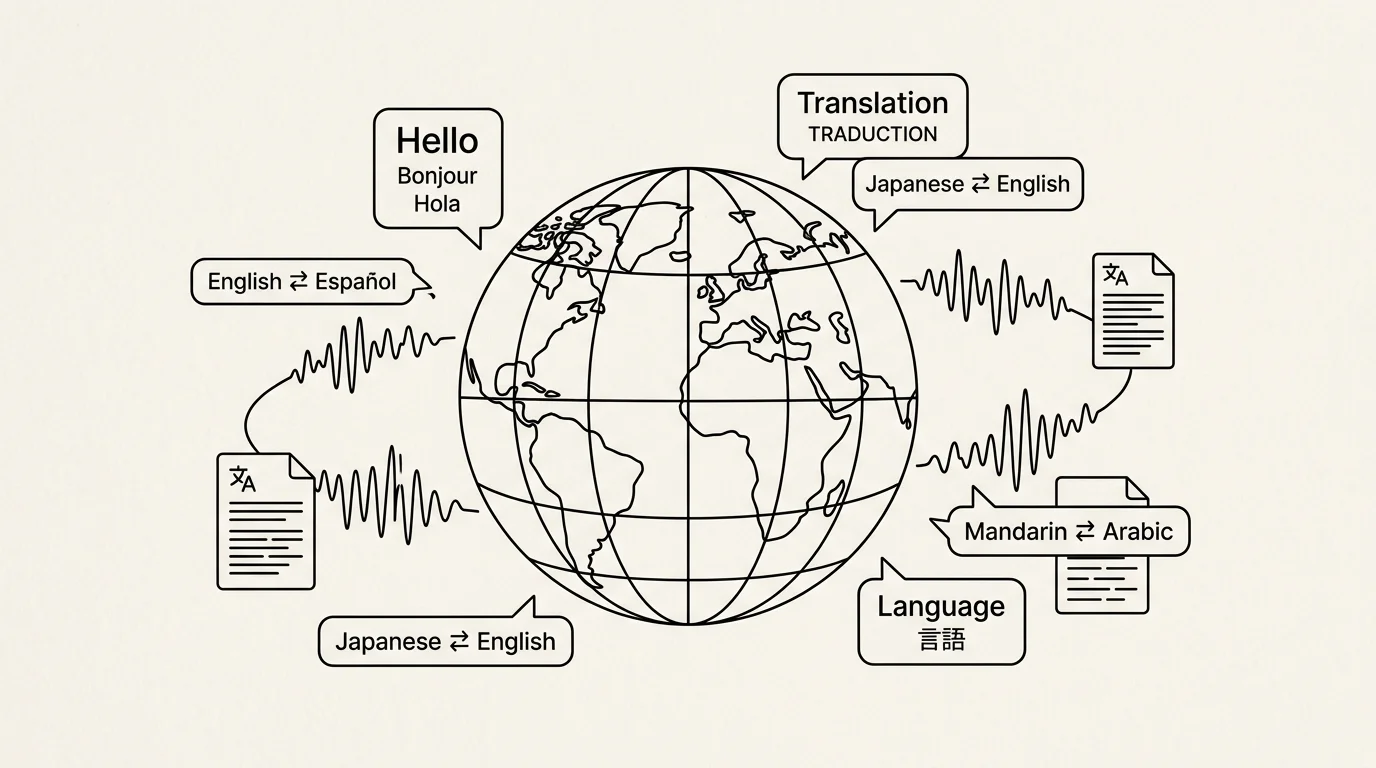
How to Get Summaries of YouTube Videos in Any Language
Watch a Japanese video, get a summary in English. Or Ukrainian. Or Spanish. Here's how AI multilingual YouTube summarization works — and who it helps most.
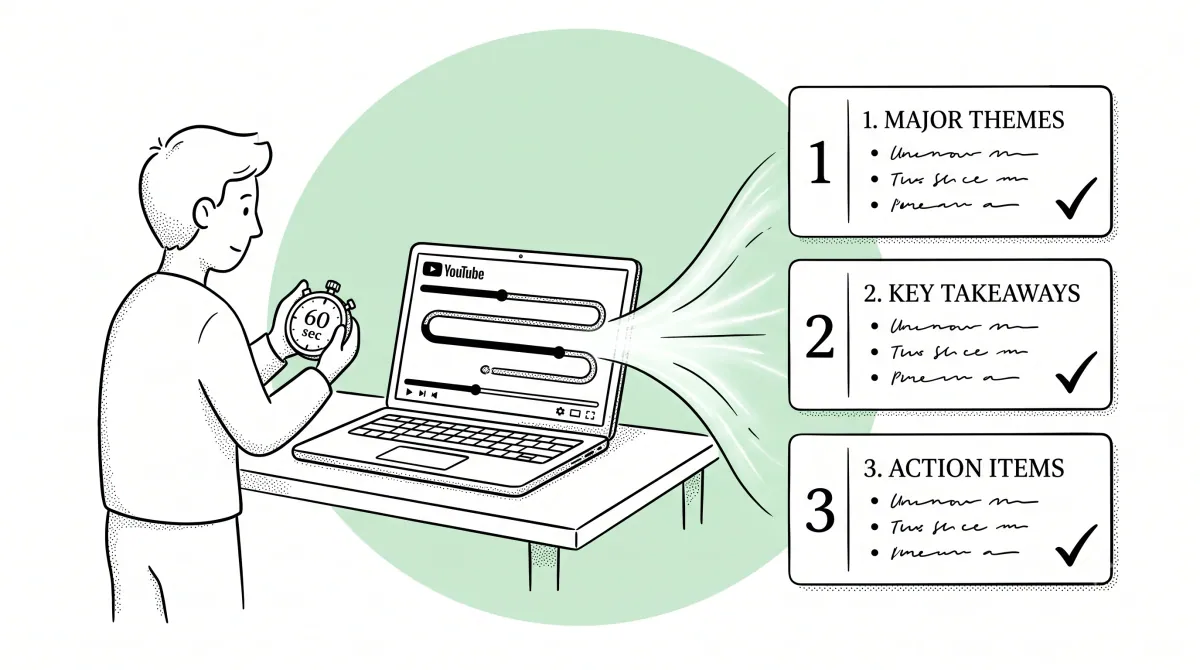
How to Summarize a YouTube Video in Under 60 Seconds (2026 Guide)
Learn 4 practical methods to summarize any YouTube video fast. Discover how AI delivers structured summaries in under 60 seconds.

YouTube for Students: How to Turn Any Lecture Into a Study Guide
Learn how students turn long YouTube lectures into structured study guides, flashcards, and revision notes using AI in under 2 minutes.
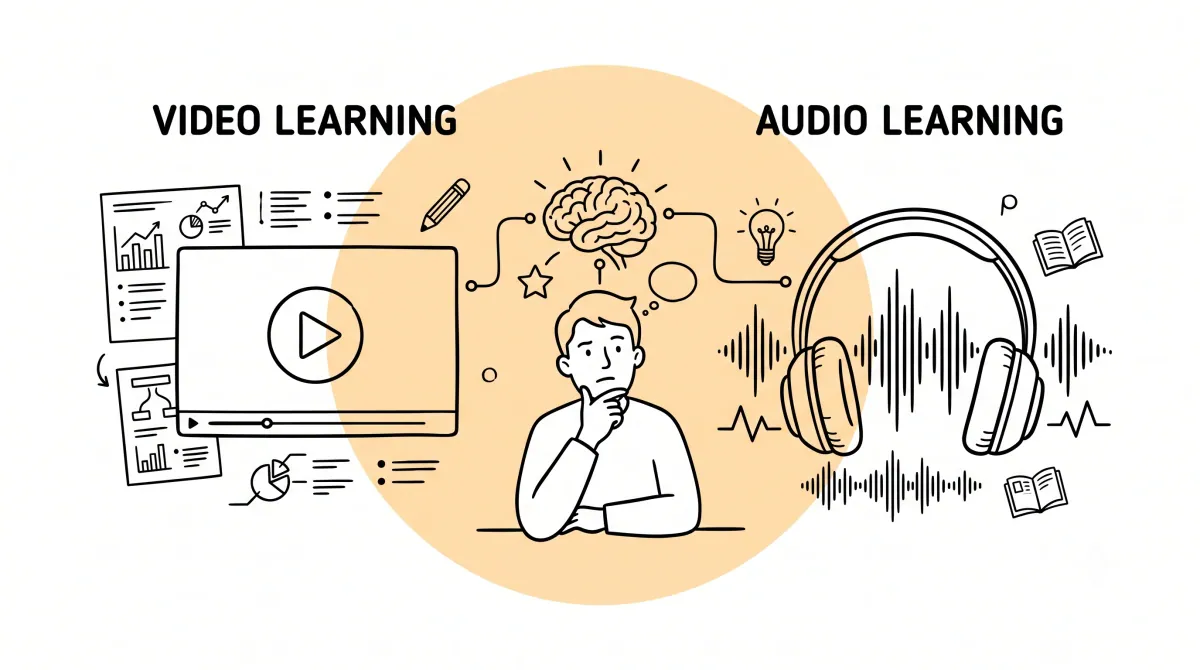
YouTube vs Podcast: Which Format Is Better for Learning in 2026?
Video or audio? We compare YouTube and podcasts for learning — retention research, practical advantages, and how AI tools have changed the equation in...
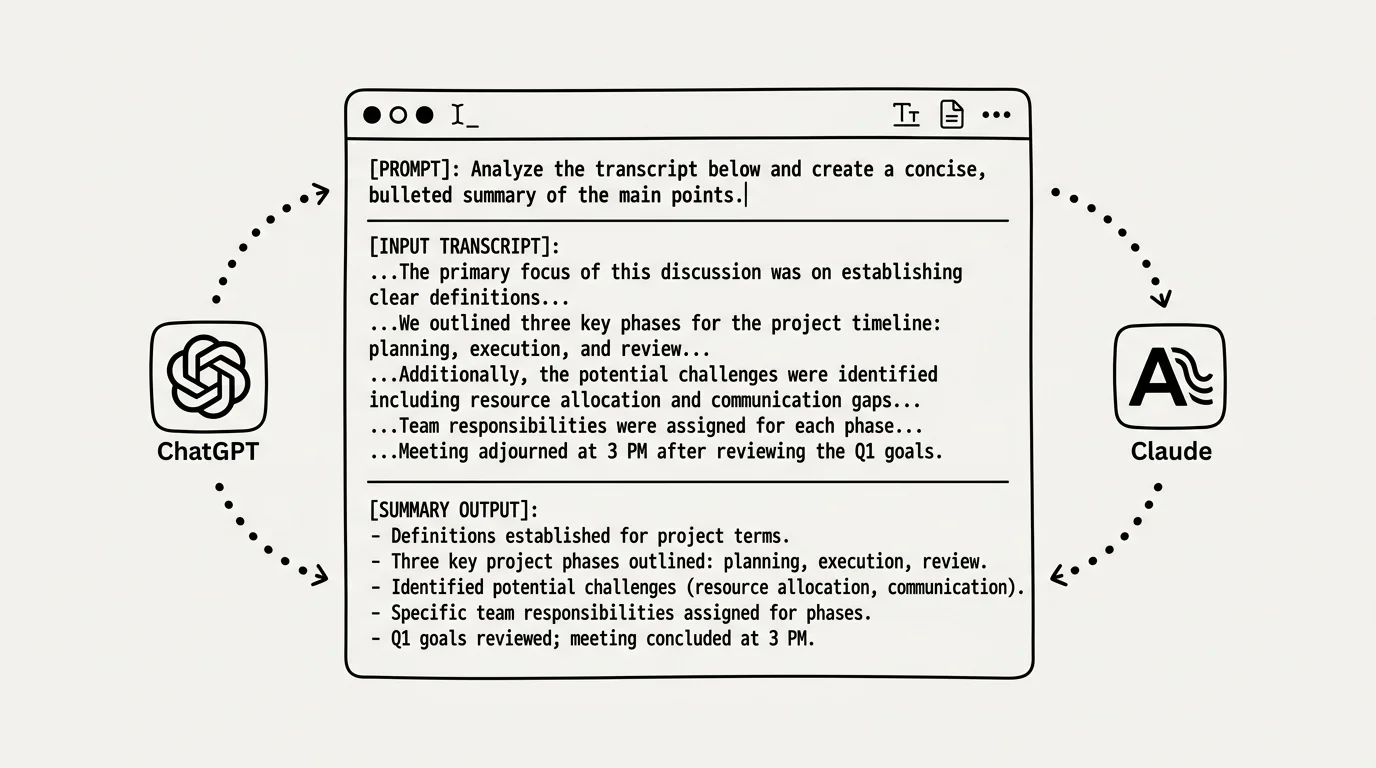
Best Custom Prompts for Summarizing YouTube Transcripts in ChatGPT & Claude
Explore the best custom AI prompts for summarizing YouTube transcripts using ChatGPT, Claude, and Gemini for faster learning and research.
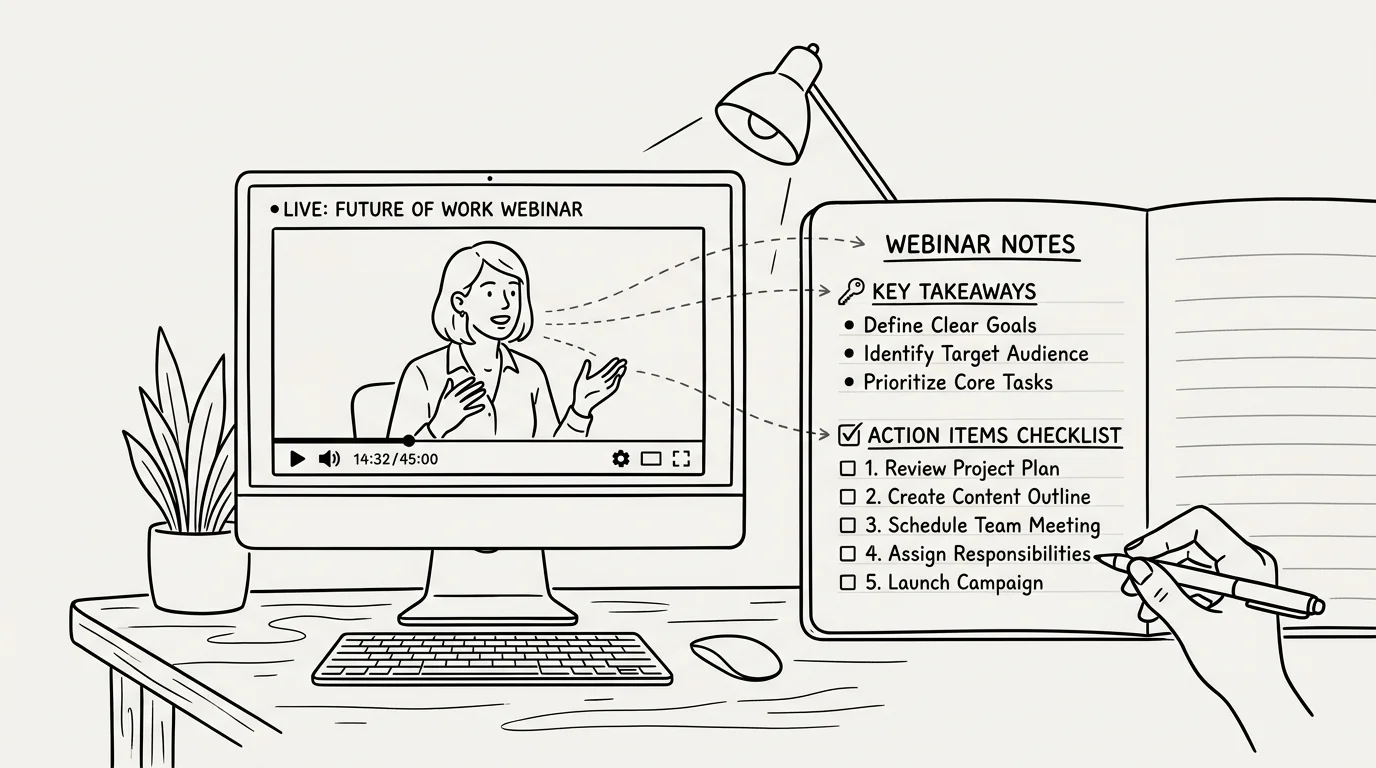
How to Extract Key Takeaways & Action Items from Long YouTube Webinars
Discover how to quickly extract key takeaways and action items from lengthy YouTube webinars and lectures using AI summarization tools.
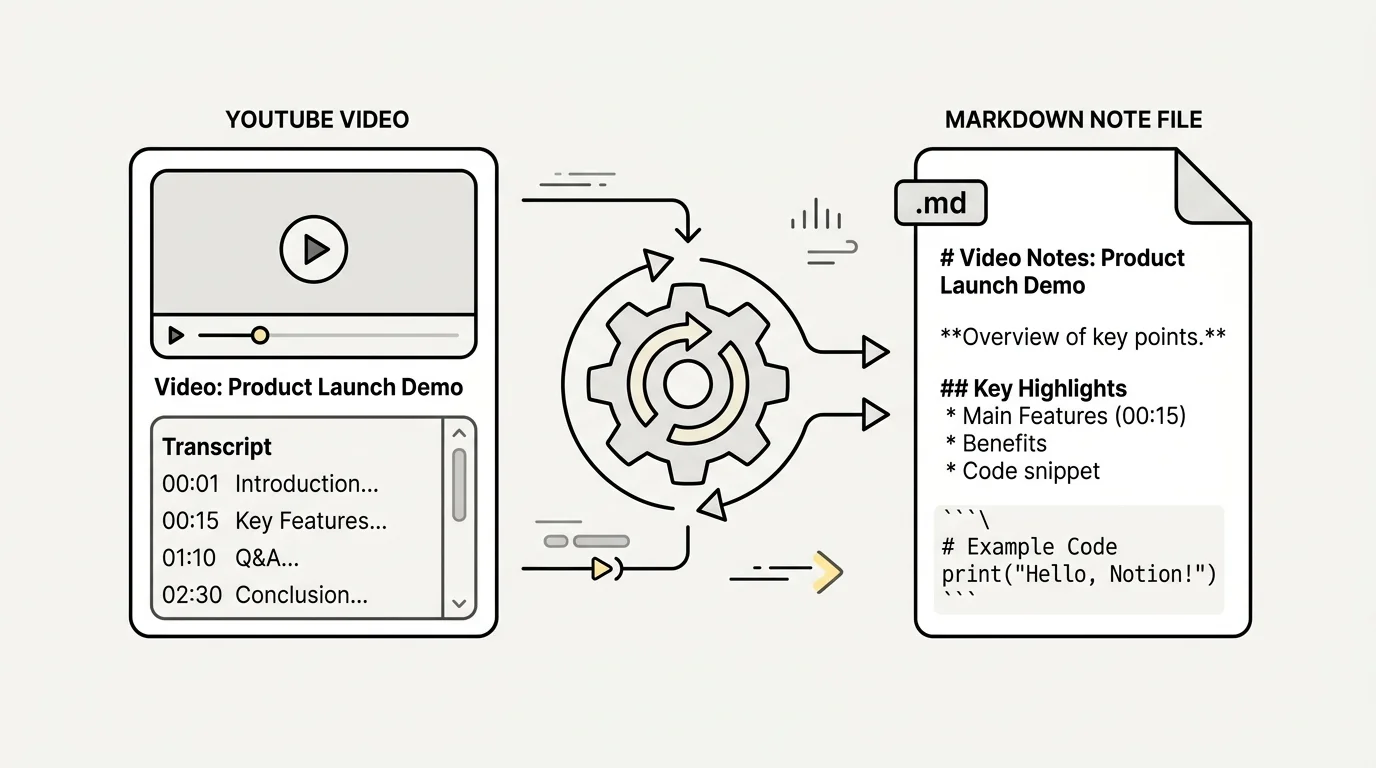
How to Convert YouTube Videos Directly to Clean Markdown for Notion & Obsidian
Learn how to convert YouTube video transcripts directly into clean Markdown files. Perfect for Notion, Obsidian, and personal knowledge management.
How to Copy and Export YouTube Video Transcripts
Find the best ways to copy and export YouTube video transcripts. Export formatted text with timestamps to Notion, Google Docs, or text files in seconds.
How to Download YouTube Transcripts as Text Files
Learn how to download YouTube transcripts as text files automatically. Compare manual copy-paste, online tools, and Chrome extensions for fast extraction.

Transcribing Long YouTube Videos to Text Safely
Discover how to transcribe long YouTube videos to text safely. Learn how to extract transcripts from protected or restricted videos without security leaks.
The Easiest Way to Get Transcripts of YouTube Videos
Stop copying subtitles line-by-line. Discover the easiest ways to extract complete transcripts from YouTube videos using built-in panels and extension...
How to Download and Format YouTube Video Transcripts
A complete walkthrough of downloading YouTube transcripts in multiple file formats, including Markdown, plain text, Word, and PDF, with custom styling...
How to Get YouTube Transcripts Clean & Formatted as Paragraphs
Auto-generated YouTube transcripts are hard to read. Learn how to remove speech errors, add punctuation, and segment video text into readable paragraph...
YouTube Transcript Guide: How to Extract Video Scripts
A complete guide on how to extract, clean, and download raw YouTube transcripts and scripts for studying and content research.
Top AI YouTube Tools to Save Hours of Watching
A curated list of the best AI YouTube tools for summarization, transcription, and interactive note-taking to optimize your visual learning workflow.
How to Summarize Long Video Interviews in Seconds
Discover how to leverage AI to summarize long video interviews, extract key dialogue, and format clean transcripts without model context errors.
Best YouTube Summarizer Options for Long Tutorials
A comprehensive comparison of the best YouTube summarizer tools for processing long tutorials, lectures, and multi-hour playlists.
ChatGPT YouTube Summary Hacks: How to Query Any Video
Discover advanced prompting hacks to query YouTube transcripts with ChatGPT and Gemini. Extract key insights, summarize chapters, and translate quotes...
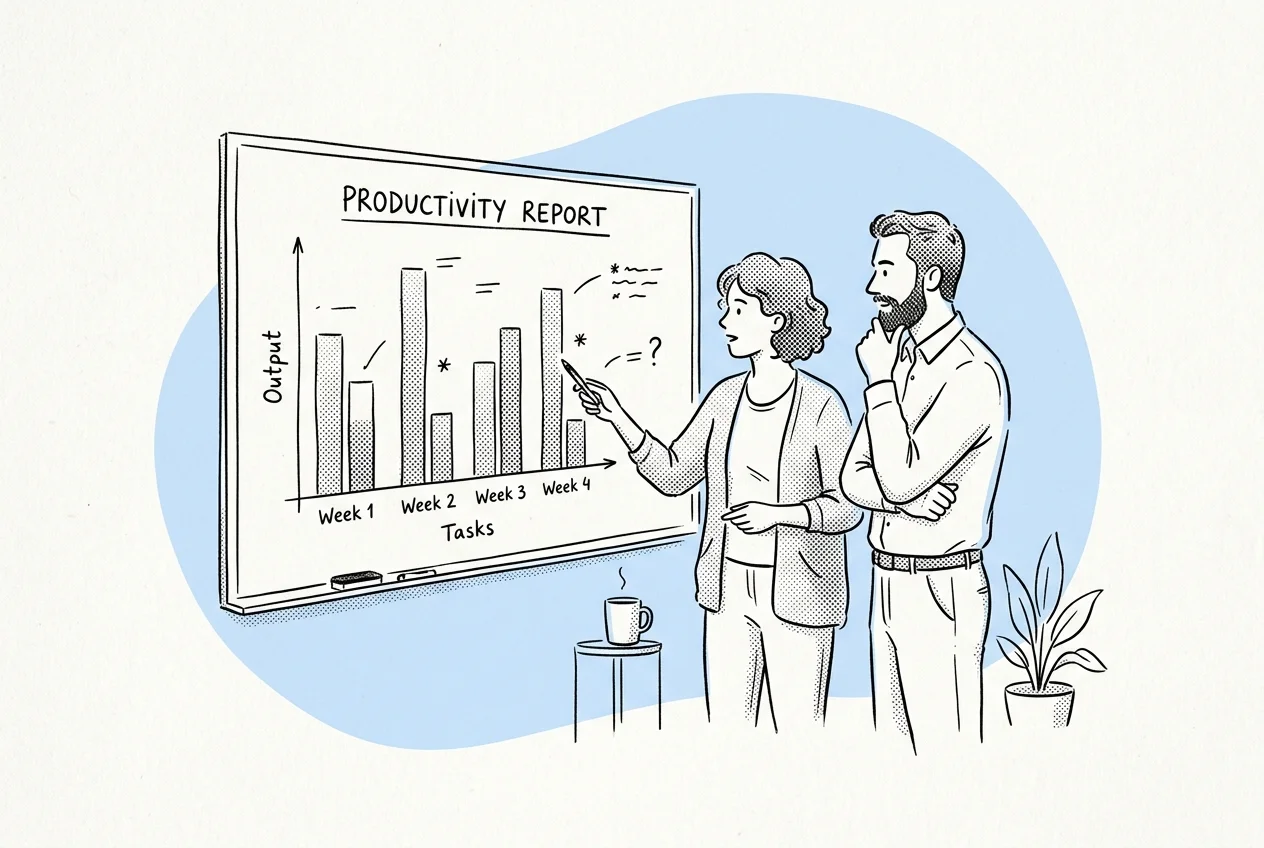
How to Use AI YouTube Video Summarizers to Research Competitors
Learn how to leverage AI YouTube video summarizers to conduct rapid competitor research, audit product demos, and analyze customer sentiment from comments.

Why YouTube Video Summarizers Are Essential for Busy Builders
Find out why AI YouTube video summarizer tools are essential for busy creators, developers, and builders. Calculate time savings and speed up your...

The Rise of AI YouTube Tools: How to Watch Less & Learn More
Explore how modern AI tools are transforming how we consume video content. Save time, automate transcripts, and build a digital learning system.
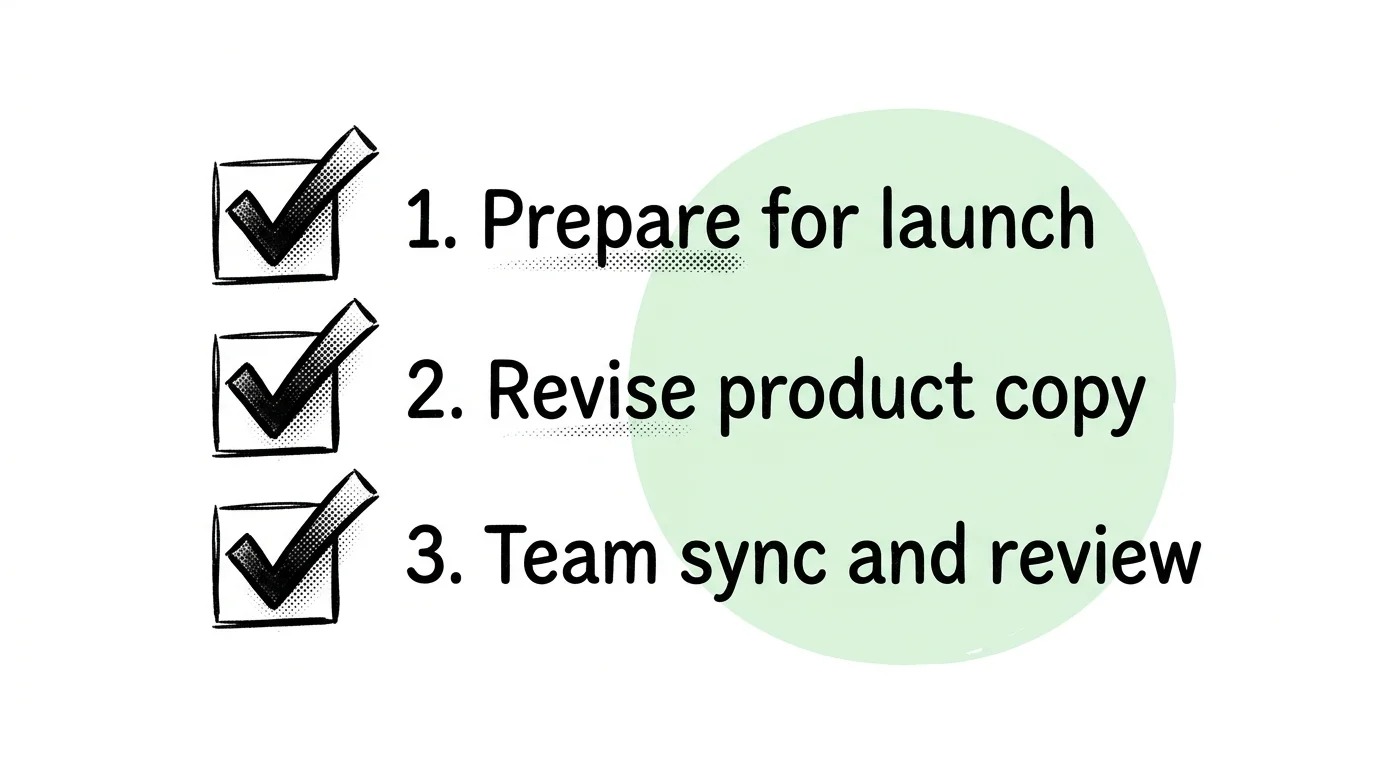
How to Get a Bullet-Point Summary of a YouTube Video
Learn how to quickly extract a bullet-point summary from any YouTube video. Clean raw transcript paragraphs, skip sponsor sections, and build clear notes.

Best YouTube Summarizer Chrome Extensions for Productivity
We review and rank the best YouTube summarizer Chrome extensions for speed-watching, note-taking, and learning. Find the right tool for your workflow.

How to Summarize YouTube Videos Automatically with AI
Learn how to automatically summarize YouTube videos using AI. Get structured outlines, clickable timestamps, and study notes in seconds.
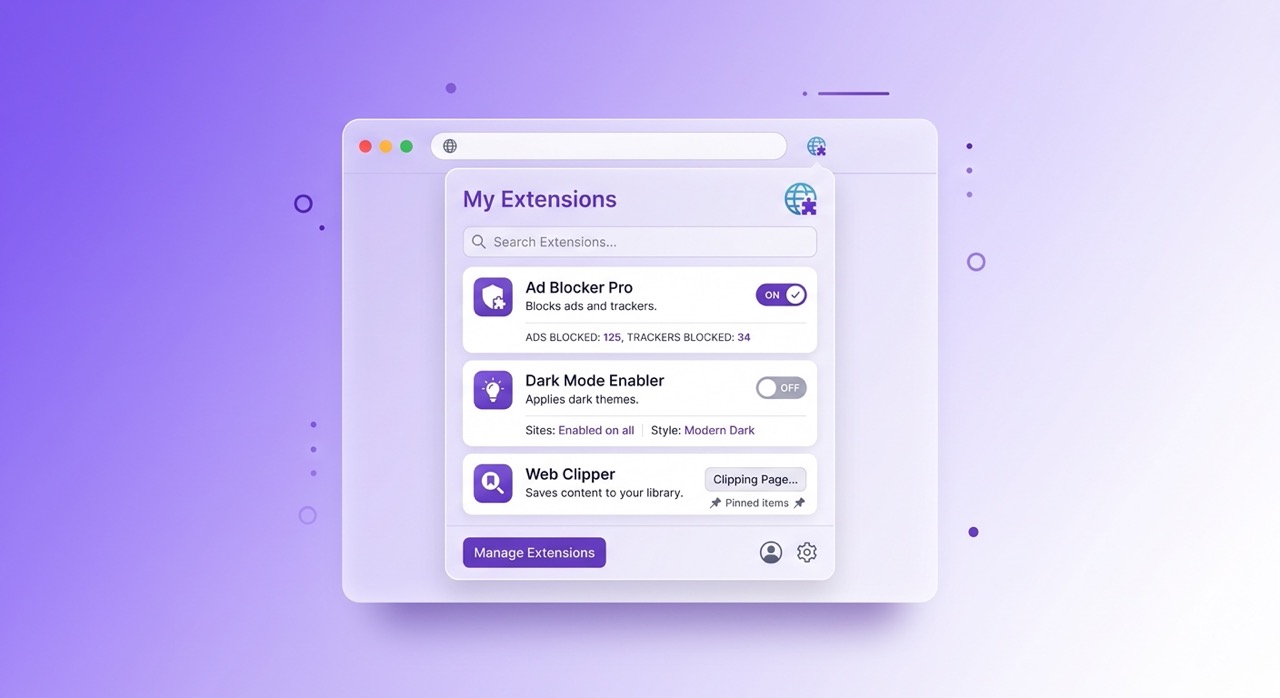
What Is Glassmorphism? Why Modern Extensions Are Adopting This Design Trend
If you have used a Mac in the last five years, opened an iOS notification panel, or interacted with almost any modern productivity application, you have...
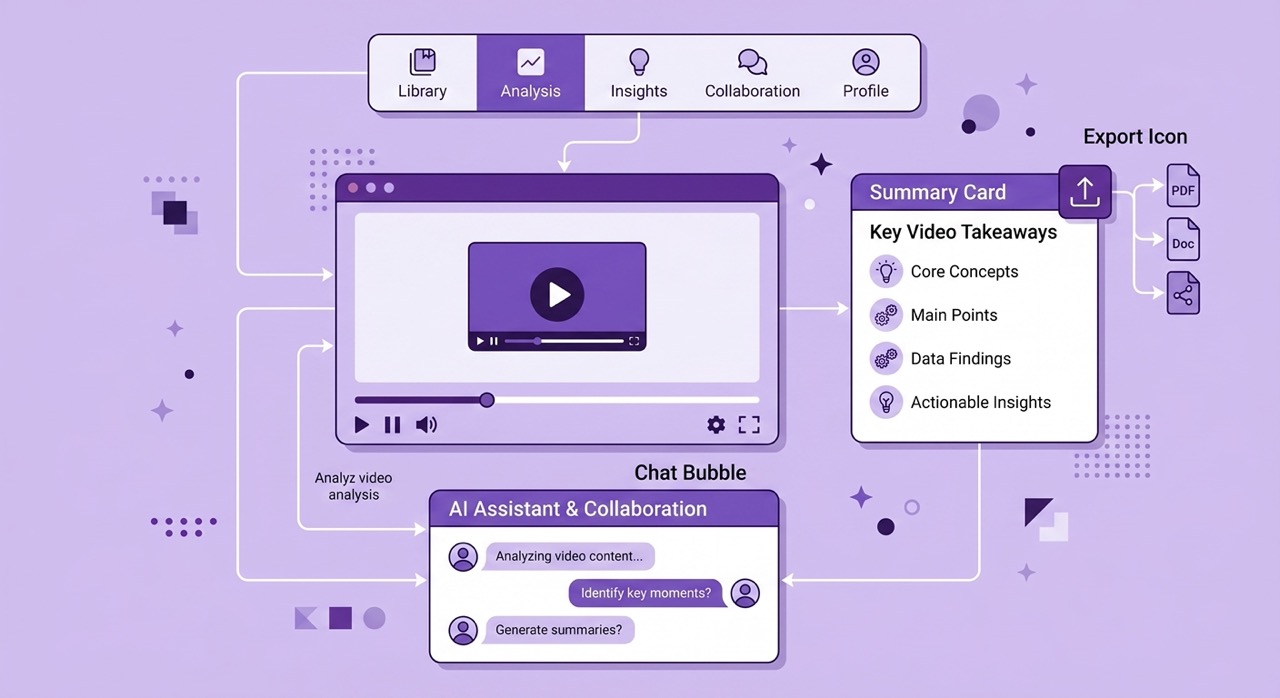
The Ultimate Guide to YouTube Productivity: Watch Less, Learn More
The complete guide to getting maximum value from YouTube: AI summarizers, note-taking workflows, export integrations, and learning strategies that...
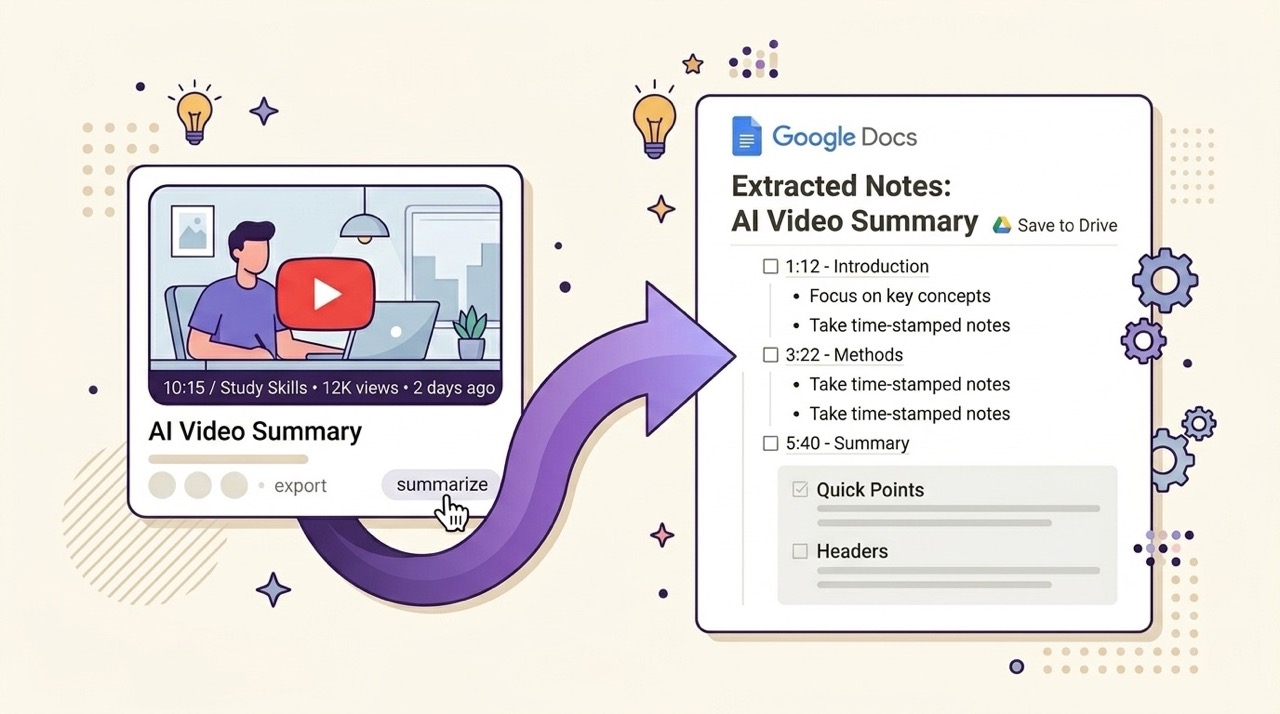
How to Export YouTube Summaries to Google Docs Automatically
Stop copying and pasting. This guide shows you how to automatically export any YouTube video summary to a new Google Doc in one click — with AI Summary.
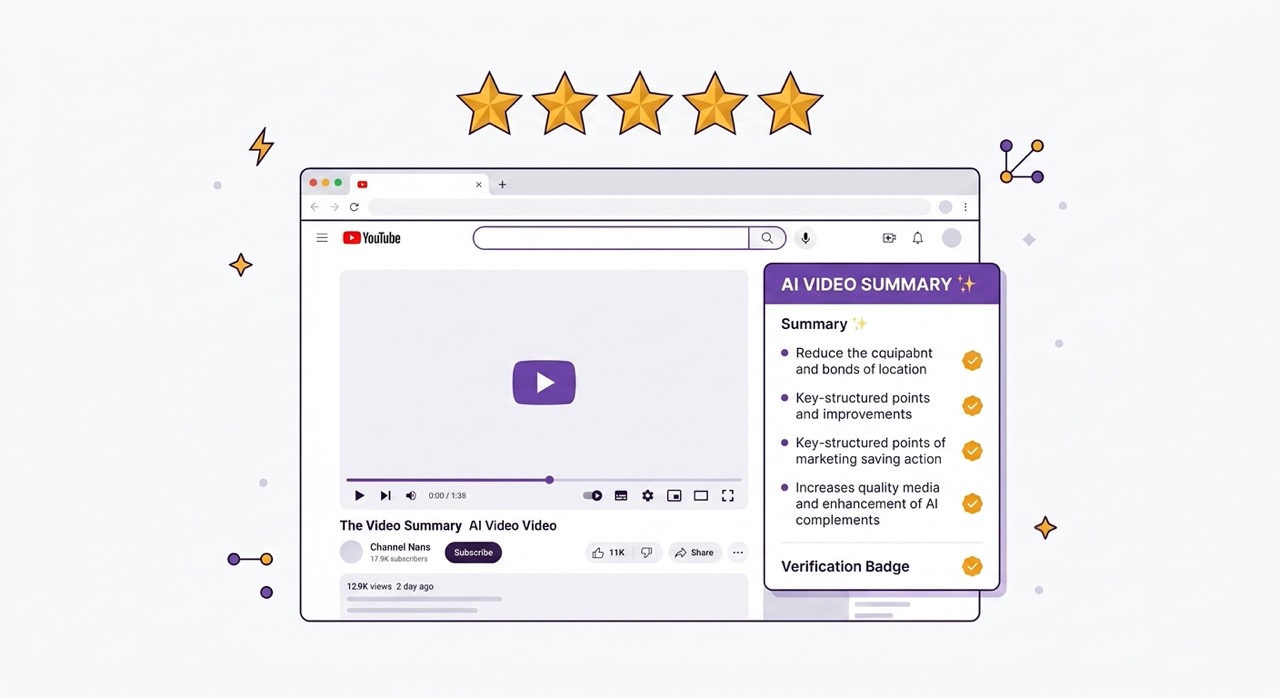
AI Summary Review: The YouTube Chrome Extension That Actually Works
Honest review of the AI Summary Chrome extension after testing it on 30 YouTube videos. Features, speed, accuracy, long video performance, and final...
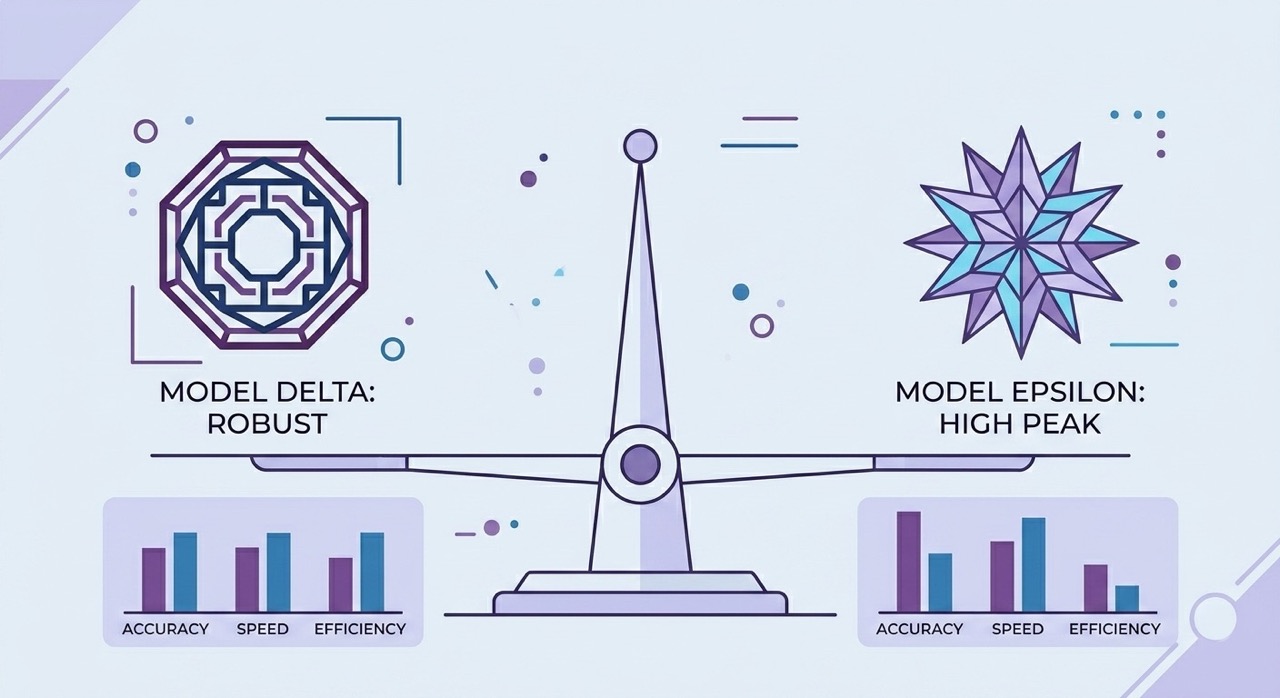
Gemini 2.5 vs GPT-4o for Summarization: A Practical Comparison
We ran Gemini 2.5 and GPT-4o on 10 real YouTube videos across 5 content types. Here are the results — with actual outputs compared side by side.
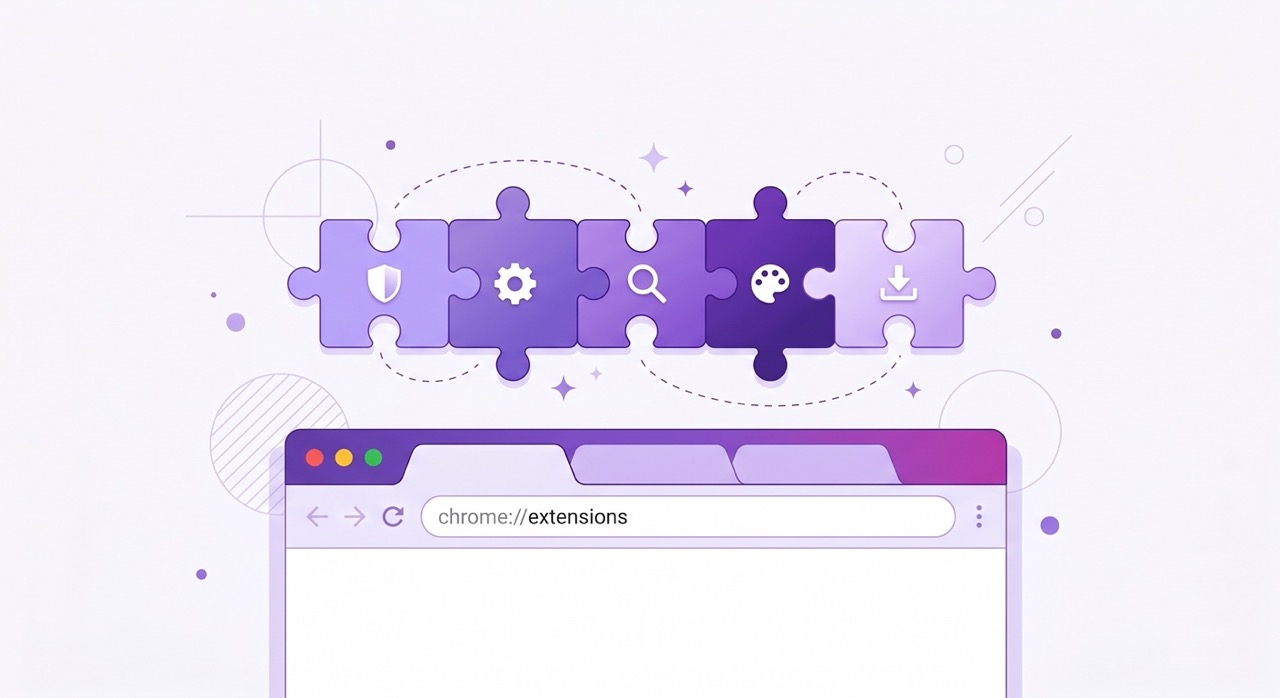
5 Chrome Extensions That Make YouTube Actually Useful for Learning
These 5 Chrome extensions transform YouTube into a powerful learning tool — AI summaries, distraction blocking, speed control, and more. Free to install.
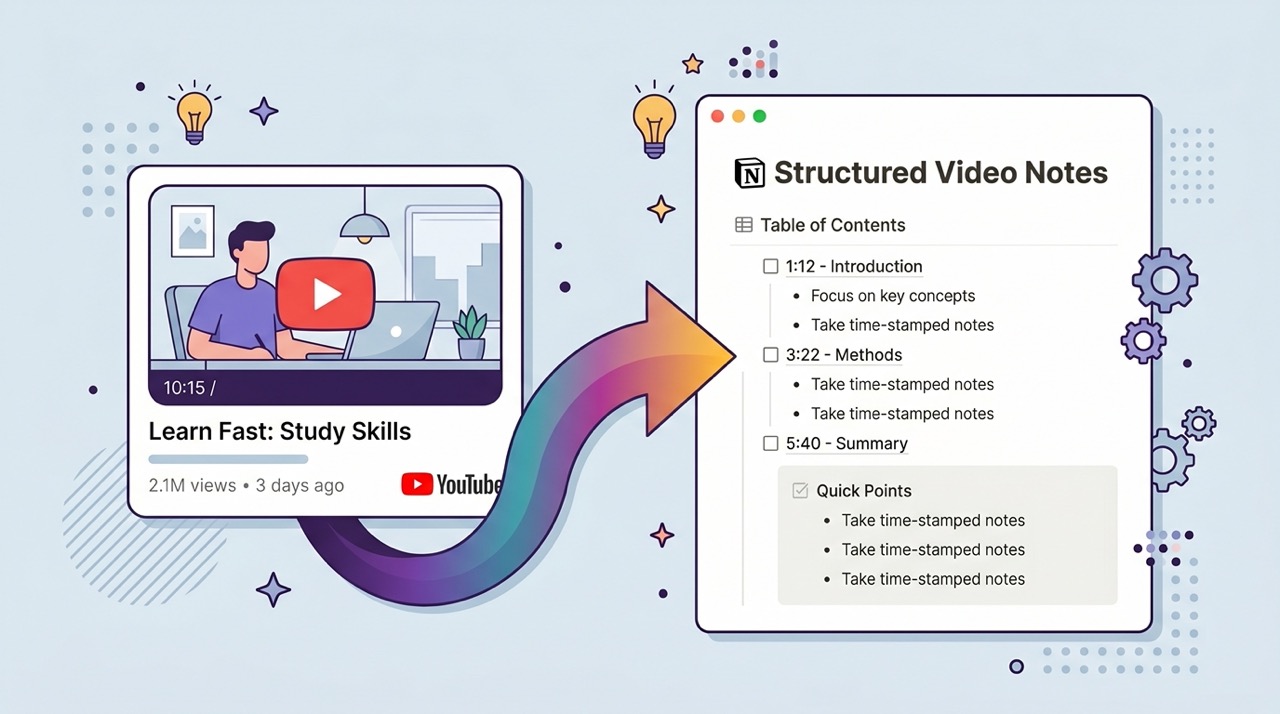
How to Save YouTube Summaries to Notion (Step-by-Step Guide)
Automatically save YouTube video summaries, timestamps, and transcripts to your Notion workspace. Here's exactly how to set it up — step by step.
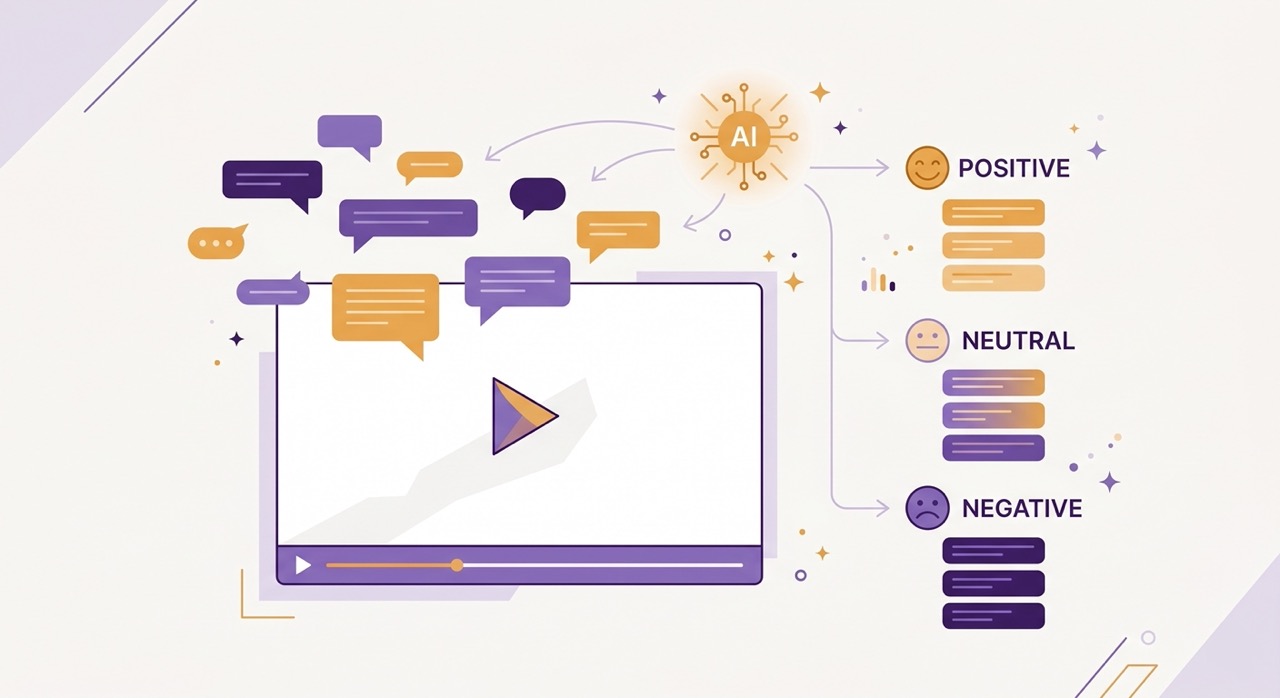
How to Use AI to Analyze YouTube Comments (What Your Audience Really Thinks)
AI can read thousands of YouTube comments and surface the real sentiment, top topics, and community feedback. Here's how — for viewers, creators, and...
How to Summarize Long YouTube Videos (2h+) Without Losing Key Details
Most AI tools fail on long videos. Here's how to get accurate summaries from 2h+ YouTube lectures, podcasts, and conferences — without losing key details.
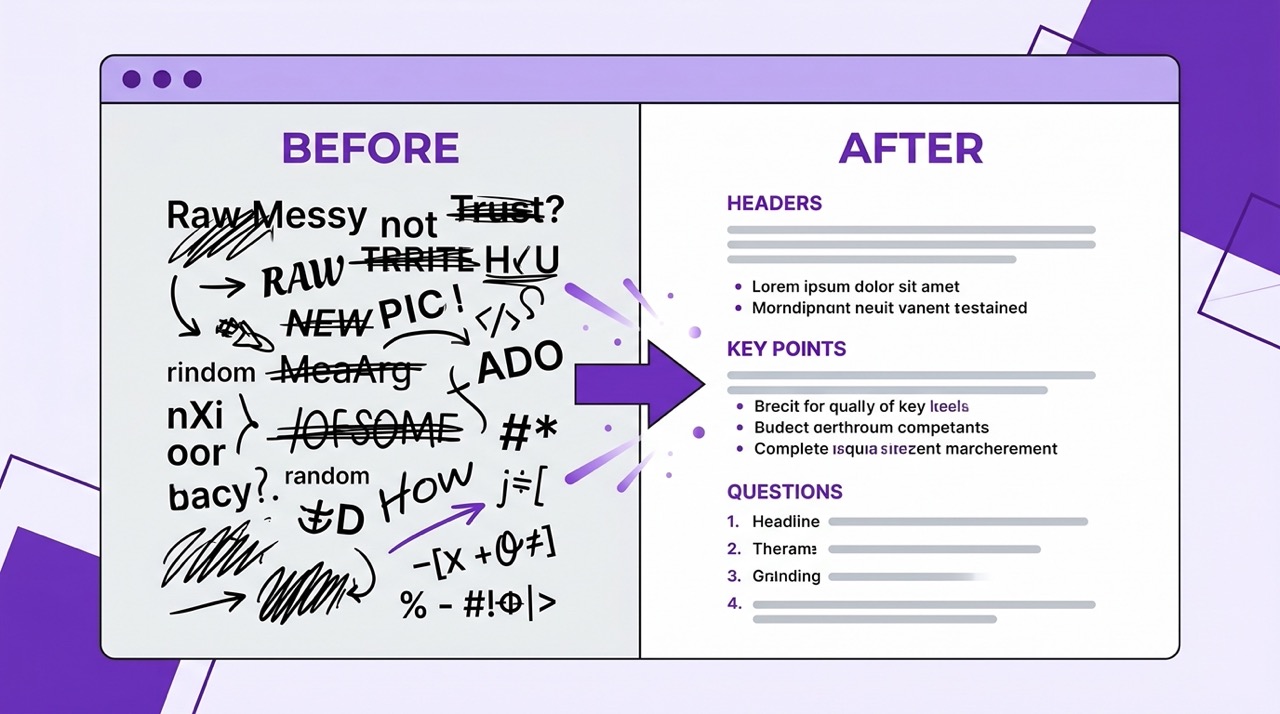
YouTube Transcript: How to Get It, Clean It, and Actually Use It
Get any YouTube video's transcript in seconds. We cover 3 methods including the AI-powered way that auto-cleans captions into readable text.
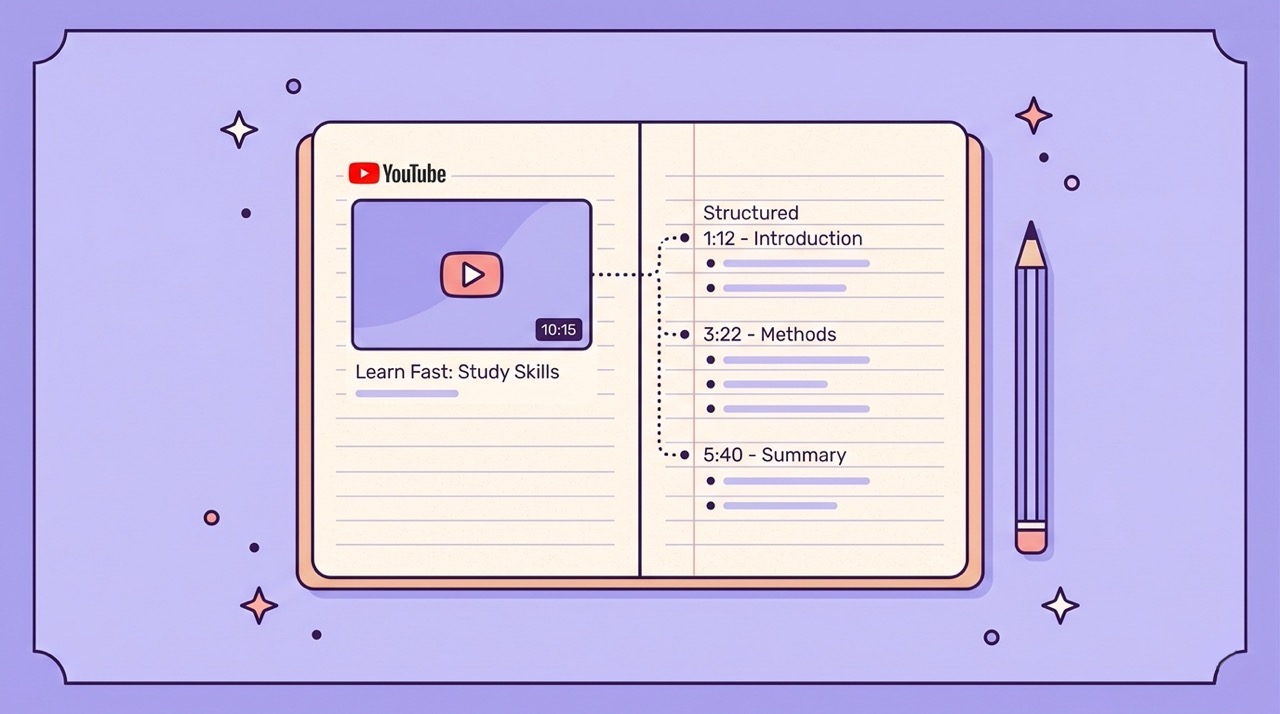
How to Take Better Notes from YouTube Videos (The Smart Student's Guide)
Stop pausing and rewinding. These 5 note-taking methods help students extract and retain information from YouTube faster — including the AI-powered method.
ChatGPT vs Gemini vs Claude: Which AI is Best for Summarizing Content?
We compared ChatGPT, Gemini 2.5, and Claude head-to-head on summarization tasks across 5 content types. The results might surprise you.
Best YouTube Summarizer Tools in 2026: Tested & Ranked
We tested 7 YouTube summarizer tools. Here's which one is actually worth using — with real screenshots, pros/cons, and pricing.
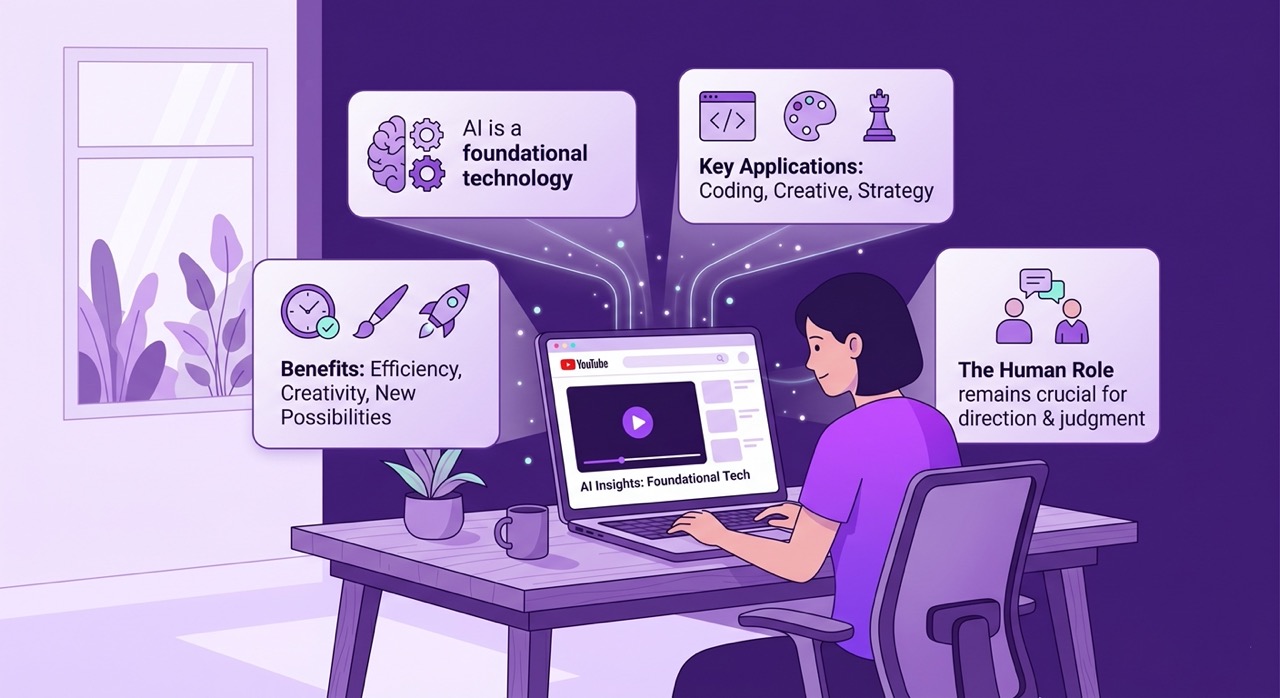
How to Use AI to Get More Out of YouTube Without Watching Every Second
Stop watching YouTube passively. Use AI tools to summarize, search, and extract insights from any video in seconds.